VC
Vint Cerf
Crocker's high-school friend and UCLA colleague. He later co-designed TCP/IP.
In 1969 a handful of graduate students were asked to work out how computers on a brand-new network should talk to each other. Steve Crocker wrote down their first ideas, and started a tradition that still governs the Internet.
$ head -n 20 rfc1.txt

Network Working Group               Steve Crocker
Request for Comments: 1                      UCLA
                                    7 April 1969

               Title:  Host Software
               Author: Steve Crocker
               Installation: UCLA
               Date:   7 April 1969

INTRODUCTION

   The software for the ARPA Network exists
   partly in the IMPs and partly in the
   respective HOSTs.
No one had been put in charge, and no one wanted to seem to claim authority. So the group's notes were offered as Requests for Comments: ideas put forward for discussion, not decrees.
Crocker's RFC 1, dated 7 April 1969, described how host computers would work with the network's Interface Message Processors (IMPs). Bill Duvall of SRI wrote the companion RFC 2. Jon Postel later became the long-serving RFC Editor.
“Very little of what is here is firm, and reactions are expected.” Steve Crocker, RFC 1 · 7 April 1969
ARPA brings together representatives of the first host sites to start planning how their computers will use the new network.
Crocker helps organize the graduate students and researchers who will design the host protocols. It is the forerunner of today's IETF.
The first Request for Comments begins the document series that still defines Internet standards.
Charley Kline at UCLA sends the first ARPANET message to SRI, where Bill Duvall receives it.
NCP, the ARPANET's host-to-host protocol, standardizes the network interface and makes it far easier for new sites to connect.
Crocker forms INWG to take networking work across borders, then turns his own research toward artificial intelligence.
After more than a decade of service, NCP gives way to TCP/IP. The protocols change; the RFC process carries on.
The ARPANET's host protocols were the work of a small group of young engineers. Crocker led the UCLA team.
Crocker's high-school friend and UCLA colleague. He later co-designed TCP/IP.
UCLA team member and later the long-serving RFC Editor, who wrote nearly 200 RFCs himself.
SRI researcher, author of RFC 2, and receiver of the first ARPANET message.
UCLA programmer who sent the first ARPANET message on 29 October 1969.
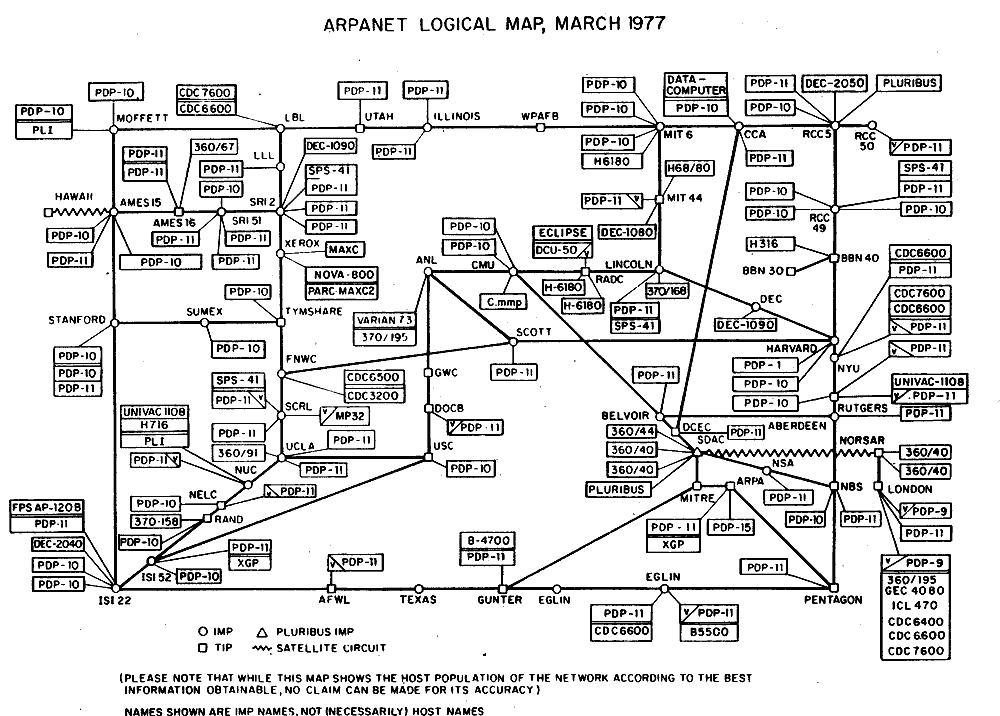
The series Crocker began now numbers well over nine thousand documents, published by the IETF and its RFC Editor.
The Internet's core protocols were all published as RFCs: IP, TCP, the Domain Name System, email, the Web's HTTP and modern encryption. Each went through the same open process of proposal, comment and refinement that began in 1969.
Every ARPANET site connected through an IMP, a ruggedized minicomputer that handled packet switching.
RFC 1 was about the other half of the problem: the software on each site's host computer that talked to its IMP and, through it, to every other host on the network. Working out that host-to-host conversation was the Network Working Group's job.
Read RFC 1 at the RFC Editor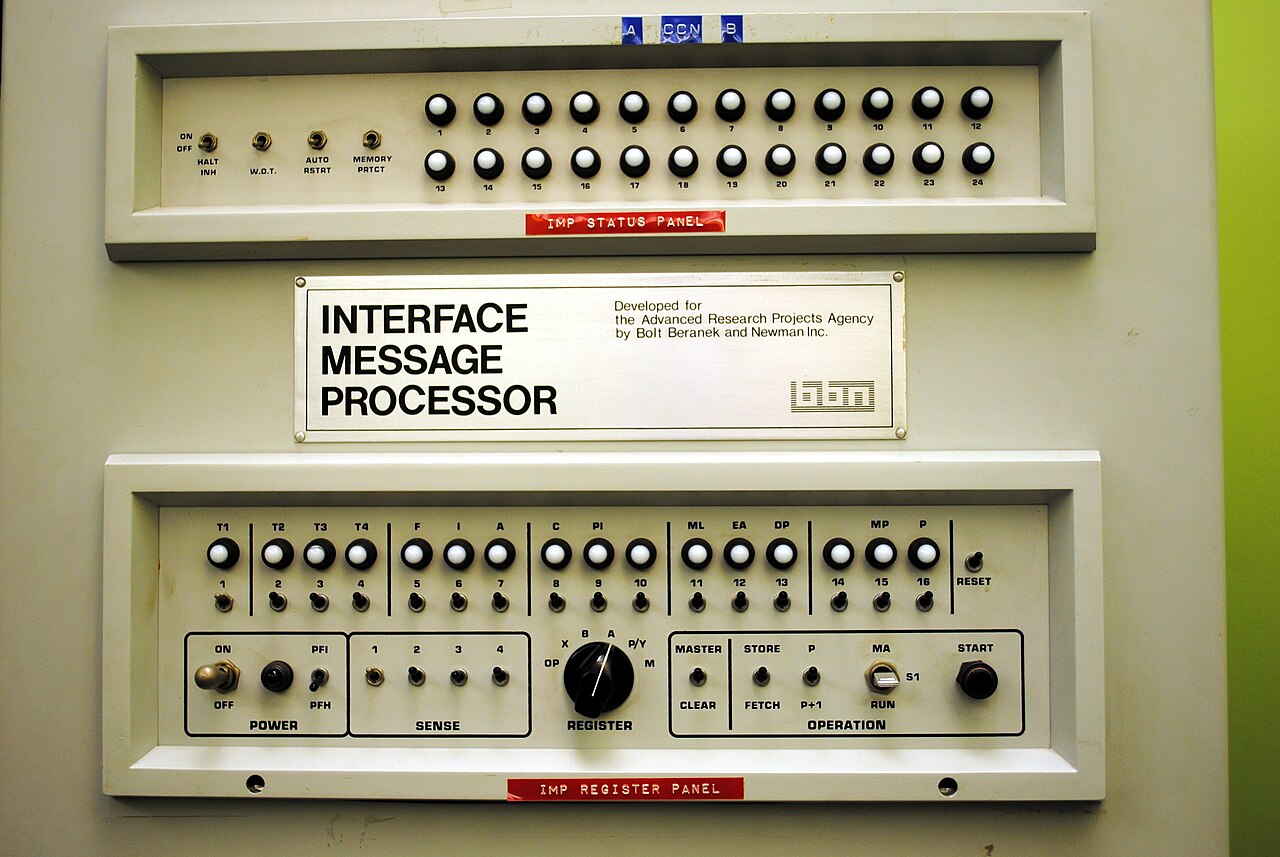
“We felt that the network services should be expandable.”